Trees don’t send an invoice, but they provide millions of dollars in benefits every year.
They intercept rainfall before it becomes flooding, reduce stormwater runoff, clean the air, cool our neighborhoods, store carbon, provide wildlife habitat, and improve our quality of life. Trees are one of South Central Texas’ most valuable forms of natural infrastructure—but that infrastructure is under increasing pressure.
Our Tree Canopy Is Shrinking
Across the United States, tree canopy continues to decline, and Texas is among the states experiencing the greatest losses. Since 2001, Texas has lost an estimated 26% of its tree canopy, while Bexar County has lost an estimated 21%.
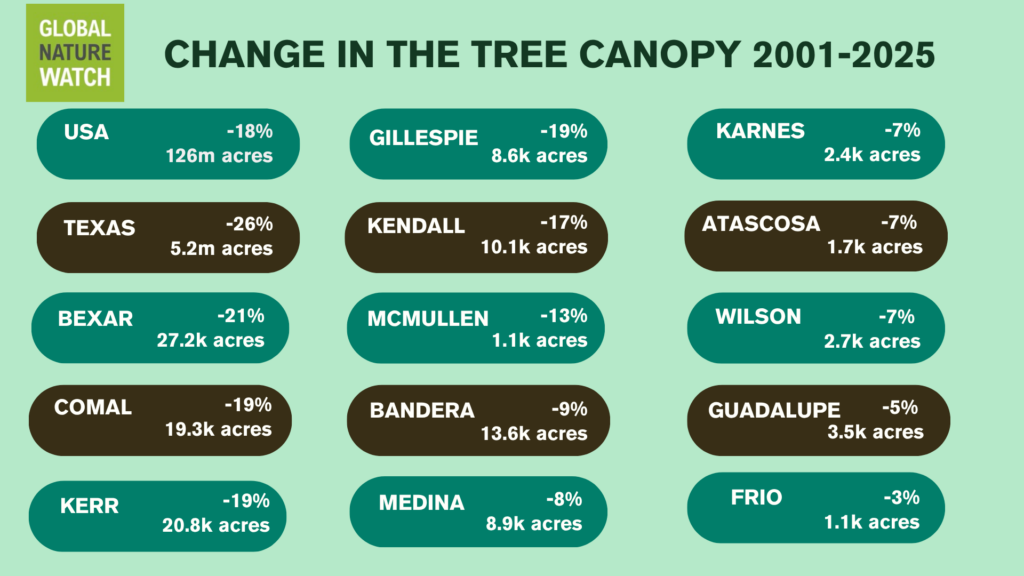
Our trees are facing multiple pressures at once, including:
-
- Rapid development
-
- Prolonged drought
-
- Extreme heat
-
- Aging tree populations
-
- Invasive pests
One of the most significant threats approaching our region is the Emerald Ash Borer (EAB). Although it has not yet reached South Central Texas, it continues moving closer.
Because many ash trees grow along our creeks and rivers, preparing for Emerald Ash Borer means planning before it arrives. Investing in diverse understory plantings and the next generation of trees today will help protect our waterways, wildlife, and communities when ash trees are eventually lost.
What Tree Canopy Loss Really Means
Tree canopy isn’t simply a collection of trees—it’s a living system that provides measurable environmental, economic, and public health benefits.
In 2025, Bexar County lost approximately 321 acres of tree canopy, about 250 football fields, or roughly the canopy provided by 20,000 medium-sized trees. During the same year, the City of San Antonio, which has the greatest resources dedicated to tree planting in Bexar County, planted approximately 4,500 trees and distributed another 10,500 trees to residents. Even with these substantial efforts, we are still losing tree canopy faster than we are replacing it, demonstrating that no single organization or community can meet this challenge alone. Reversing this trend will require coordinated investment and action across the entire region.
That loss means our communities no longer receive:
-
- More than 20 million gallons of intercepted rainfall
-
- More than 4 million gallons of naturally retained stormwater runoff
-
- More than 5 million pounds of carbon captured each year
-
- Cooling from shade and evapotranspiration that helps reduce extreme heat
-
- Air filtration that removes ozone and fine particulate pollution
Together, these lost ecosystem services represent an estimated $530,870 in annual natural infrastructure value.
Click here to learn more about the trees in your county!
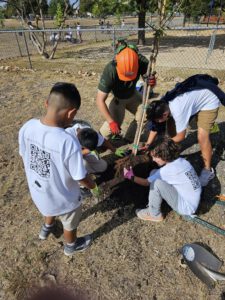
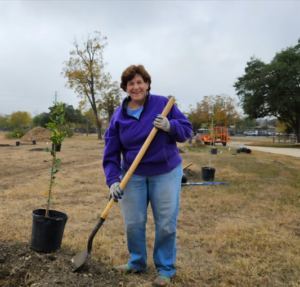
Planting Trees Is Only Part of the Solution
Planting trees is essential, but planting alone won’t rebuild our canopy.
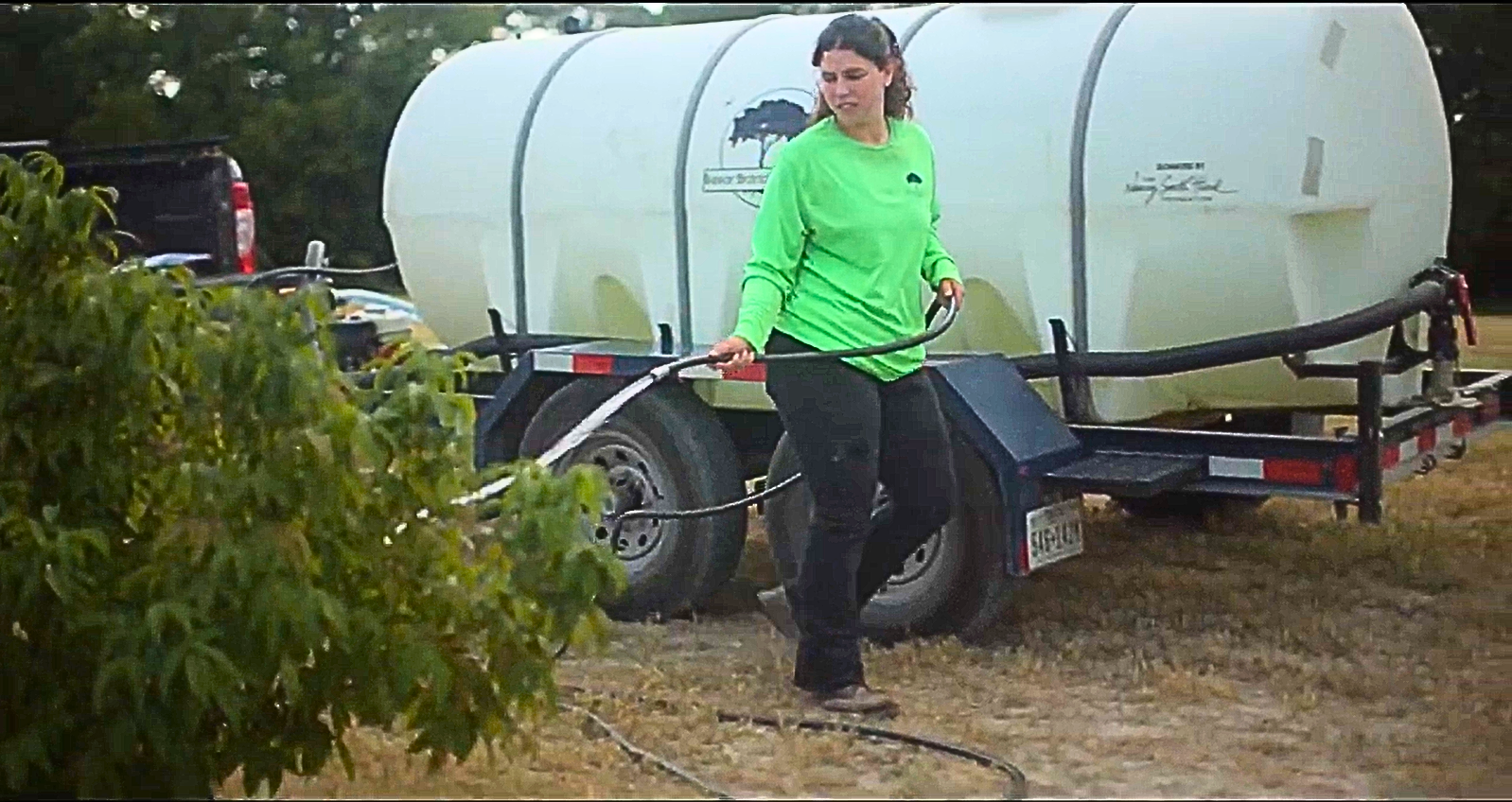
Young trees require years of watering, maintenance, and care before they provide the same benefits as mature trees. Protecting healthy existing trees preserves decades of environmental and economic value that cannot quickly be replaced.
Growing our canopy means investing in the entire lifecycle of our trees—from planting and establishment to preservation and long-term stewardship.
The Right Tree in the Right Place
Every tree we plant is a long-term investment.
Regionally native trees are adapted to South Central Texas’ climate and soils while providing food and habitat for birds, pollinators, insects, and other wildlife that evolved alongside them. Planting native species strengthens healthier, more resilient ecosystems.
Some commonly planted nonnative trees, however, create long-term ecological challenges.
Chinaberry and Chinese pistache have escaped cultivation and spread into natural areas, where they outcompete native vegetation and reduce biodiversity. Replacing opportunities to plant native trees with invasive species creates problems that are difficult and costly to reverse.
We’re also seeing increased interest in trees like moringa, valued for its rapid growth and nutritional benefits. While moringa has appropriate uses, every tree introduced into our landscape should be evaluated for its long-term ecological impact—not simply because it appears to solve multiple challenges.
Fortunately, South Central Texas already has native species that provide both ecological and cultural value. Trees such as mesquite and huisache thrive in our climate while supporting wildlife and providing valuable food sources.
Building a resilient canopy means planting trees that don’t just survive—it means planting trees that belong.
Preparing for What’s Ahead
A resilient tree canopy depends on diversity.
Communities that rely too heavily on only a few tree species become more vulnerable to pests, diseases, and changing environmental conditions. Preparing for future threats like Emerald Ash Borer starts by planting diverse, regionally appropriate species today.
The trees we plant now will shape the landscapes future generations inherit.
A Regional Opportunity
The challenges facing our trees don’t stop at city limits.
Communities across South Central Texas are experiencing many of the same issues: population growth, development, extreme heat, aging tree populations, invasive pests, and limited resources for long-term tree management.
Those shared challenges create an opportunity for shared solutions.
Bexar Branches Alliance is working alongside regional partners and stakeholders to develop a coordinated strategy that grows and preserves tree canopy while preparing communities for future challenges. By sharing knowledge, coordinating resources, strengthening local policies, and investing in both tree planting and preservation, we can build healthier, more resilient communities across South Central Texas.
https://www.youtube.com/watch?v=VTUwleJAnj8Our Commitment
Bexar Branches Alliance exists to help build a robust community forest that contributes to an equitable and ecologically resilient future for South Central Texas.
Through community tree plantings, preservation programs, workforce development, education, and regional partnerships, we are helping ensure today’s investments become tomorrow’s healthy tree canopy.
Because protecting our trees isn’t simply about planting more of them—it’s about protecting the natural infrastructure that protects all of us.
Help Grow the Future
A healthy tree canopy doesn’t happen by accident. It takes communities working together to plant, preserve, and advocate for the trees that will benefit South Central Texas for generations.
You can help by:
- Sharing the importance of native trees and healthy tree canopy.
- Volunteering with Bexar Branches Alliance at tree plantings, stewardship events, and educational programs.
- Supporting our mission through a donation to help plant trees, preserve existing canopy, and build a more resilient future.
Together, we can ensure the trees we plant today become the legacy we leave tomorrow.
Donate Today!